Cabin Air Safety Act

Senator Richard Blumenthal proposed new legislation to be added to the ever-expanding FAA Federal Aviation Administration Reauthorization Act in an effort to protect airline travelers in his amendment titled the Airline Passengers’ Bill of Rights. This amendment defines and expands the rights provided to passengers and ensures tougher oversight of the airline industry. This is in regards to the long hidden and denied issue of Contaminated Cabin Air as well as the many serious debilitating health issues that prolonged and residual accumulative exposures create in Pilots, Flight Attendants and Passengers.


More Cabin Air Safety Act

ICARUS Cockpit Culture of Fly Till You Die

Greek Mythology told of a story with a father named Daedalus. He warned his son Icarus not to fly too high, or the sun would melt his waxen wings. However, the boy, intoxicated with flight, soared above his cautious father. In the clear blue sky, the warmth of the sun dissolved his delicate wings, causing him to plunge to his death in the green sea below. The myth of Icarus is used to illustrate the ancient Greek word hubris, a term for the overweening human pride and vanity that often result in tragedy. … More ICARUS Cockpit Culture of Fly Till You Die

Germanwings Pilot had a Flight Log with over 156 Contaminated Air Fume Events

The final Flight Logbook of the deceased German Wings Pilot Andreas Lubitz tells the story. He had clearly been slowly poisoned to death. After reading his Flight Log, there is not a shadow of a doubt now for me that he died from Contaminated Cabin Air. Keep in mind that I have permanent heart muscle damage leaving me disabled from flying after (9) such events, This Pilot had been flying on aircraft that had a mind-numbing 156 or more Fume Events prior to his death in the Flight Logbook. These events were also often followed by multiple pressure leaks with reduced oxygen levels on multiple Germanwings aircraft. … More Germanwings Pilot had a Flight Log with over 156 Contaminated Air Fume Events

Toxic Cabin Air Litigation Continues to Recirculate Through the Courts

A key issue in domestic toxic cabin air litigation is whether state law negligence standards apply or whether a plaintiff’s claims are preempted by federal law under the theory of implied field preemption.

One of the first issues commonly litigated is whether the case will be heard in federal or state court. Another issue many of the injured faces is the fact that “Aerotoxic Syndrome” is not an officially recognized medical diagnosis in the US Court system. However, Organophosphate Poisoning is an accepted term. The next Burden of Proof entails showing the direct cause of this type of injury in a court of law.  It will remain impossible to monitor or find the root cause for toxic fume event exposures until the industry implements a cabin air sensor monitoring system. … More Toxic Cabin Air Litigation Continues to Recirculate Through the Courts

Cabin Crew Survival Guide for dealing with Chlorpyrifos Chemical Exposure

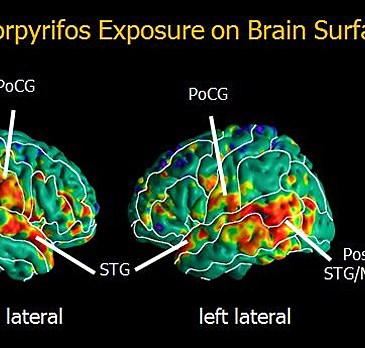
The Nazis developed organophosphates during World War II as nerve gas agents. (Sarin gas is in this family of chemicals.) After the war, the chemical companies adapted the organophosphates to be used as pesticides, primarily as insecticides. Chlorpyrifos is an organophosphate pesticide first registered as an insecticide in the U.S. for both agricultural and residential uses, before Silent Spring and adoption of environmental and health standards in U.S. laws governing pesticide use in 1965.

The pesticide in question, chlorpyrifos, is a nasty piece of work. It’s an organophosphate, a class of bug killers that work by “interrupting the electrochemical processes that nerves use to communicate with muscles and other nerves,” as the Pesticide Encyclopedia puts it. Chlorpyrifos is also an endocrine disrupter, meaning it can cause “adverse developmental, reproductive, neurological, and immune effects,” according to the National Institutes of Health. … More Cabin Crew Survival Guide for dealing with Chlorpyrifos Chemical Exposure

Toxic Cabin Air Quality campaigners call for Chemical Sensor Detectors in planes

Recommendation of the Air Accident Investigation Board (AAIB) is that all planes should be fitted with air monitoring and warning systems for air safety.

“In your house you will have a fire detector and a carbon monoxide detector,” he said, “you will find air quality detectors in mines, submarines and spacecraft – in any enclosed space where you can’t simply open the door – but not planes. I personally think it’s because the air industry won’t like what they find.” … More Toxic Cabin Air Quality campaigners call for Chemical Sensor Detectors in planes

Canary in the Cabin

Canary in the Cabin:

Did you know that there are telltale signs that your plane may be soon to have a Fume Event? There are indicators but you have to be paying attention to your passengers and you must have situational awareness. If you continue to fly on a plane where there are what I call chronic “Sick Rows” then do not ignore this problem. You notice that there seems to be an odd coincidence going on in a single row flight after flight. A group of passengers in one row of three on aircraft left midway in the back of the cabin typically around row 18 to 23 somewhere in that area keeps getting sick flight after flight. … More Canary in the Cabin

MCS Multiple Chemical Sensitivity

Multiple chemical sensitivity can include a wide range of symptoms, which some people link to their environment. It’s also known as “environmental illness,” “sick building syndrome,” or “MCS.” Your doctor may call it “idiopathic environmental intolerance.”

The symptoms people report is wide-ranging. They include a headache, fatigue, dizziness, nausea, congestion, itching, sneezing, sore throat, chest pain, changes in heart rhythm, breathing problems, muscle pain or stiffness, skin rash, diarrhea, bloating, gas, confusion, trouble concentrating, memory problems, and mood changes.

Multiple Chemical Sensitivity; in broad terms, it means an unusually severe sensitivity or allergy-like reaction to many different kinds of pollutants including solvents, VOC’s (Volatile Organic Compounds), perfumes, petrol, diesel, smoke, and “chemicals.”

The problem is ongoing, ie. chronic, and not a “one-off” event. The same symptoms are reproducible with repeated exposure to the same triggers. The patient is affected by many different triggers. The patient improves when triggers are absent. … More MCS Multiple Chemical Sensitivity

Heart Muscle Damage from Cabin Air Fume Events with Bleed Air Leaks:

High troponin levels usually indicate heart muscle damage, pulmonary hypertension, myocarditis, cardiomyopathy or congestive heart failure, according to the University of Maryland Medical Center. Additionally, medical procedures such as electrical cardioversion, and long-lasting illnesses such as kidney disease and heart disease, can cause high levels of troponin in the blood. Can you heal a damaged … More Heart Muscle Damage from Cabin Air Fume Events with Bleed Air Leaks:

R47-Protumol Natural Therapy Miracle Cream for Skin Conditions

This new amazing all natural skin cream called R47 Promtumol is nothing short of spectacular for every type of skin injury or illness. I do not throw the word Miracle around lightly as I am probably the biggest skeptic ever when it comes to skin care products. As I have bought and tried them all. … More R47-Protumol Natural Therapy Miracle Cream for Skin Conditions